 Reported in the International Herald Tribune, Autonet Mobile plans to start shipping the Mobile In-Car-Router for the US in Spring 2007. The wireless router, which essentially turns your vehicle into a Wi-Fi hotspot doling out 400 Kbps to 1 Mbps bandwidth, is specifically engineered to prevent network drops while your car is in transit. On January 2, 2006 Autonet Mobile and Avis announced that Avis would adopt the Autonet mobile hotspot in its fleet, available to customers for an additional fee.
Autonet chose Wi-Fi to incorporate the plethora of devices that connect by Wi-Fi, naming laptops, media players, cameras, phones, and even video game consoles. Clearly this surfing, streaming, and gaming experience is not intended for the driver while in motion. We hope.
Today even my GSM phone still finds deadspots in the greater metropolitan area in which I live. Autonet addresses the concern about dropped connections two ways: using a nearly-ubiquitous 3G networks in North America, and TRU Technology (patent pending). Autonet claims that their unit is designed to work on 95 percent of U.S. roads. I assume similar claims can be made by the numerous broadband PC cards available to wireless network subscribers. Autonet's secret sauce is staying connected while in motion which uses a patent-pending technology which is evidently based on how the Space Shuttle manages its data network connection to the ground.
The proof will be in the doing, and Avis customers will be able to kick the tires on the In-Car-Router for $10,95 per day, starting in March 2007. For individuals, the Autonet mobile unit is priced at $399, and the monthly service charge at $49.
Q: If your In-Car-Router is plugged into your vehicle's 12VDC power outlet, how many more outlets do you have to spare for the devices actually connecting to the In-Car-Router?
Photo source: Autonet Mobile, Inc.
Friday, January 05, 2007
Avis is expected to offer in-car Wi-Fi hot spot by March

Friday, December 08, 2006
Tragic End To Search For Missing Dad
 CBS News reported on the tragic death of James Kim, who died in the Klamath Mountains of Oregon while seeking aid for his wife and children, who were snow-bound in their car after making a wrong turn into unplowed and impassable roads. Fortunately, James' wife Kati and daughters Penelope and Sabine were rescued and survived the ordeal. In this story, mobile technology is credited with helping save lives. By doing so, it points out how reliance on technology may put lives at risk.
Edge Wireless LLC, a member of Cingular Wireless' network, engineers Eric Fuqua and Noah Pugsley were credited with using cell phone records, computer modeling, and creativity to help authorities narrow their search for the missing Kim family.
The engineers were able to trace a "ping" from the Kims' phone when it received the text messages. They located not only the cell tower in Glendale, Ore., from which the messages were relayed, but a specific area west of the town where the phone received them.
The two created a map to further limit the search by eliminating areas where network coverage did not extend, and through their efforts, an even greater tragedy may have been avoided.
Inconsistent network quality and unreachable areas, whether they are in the rugged terrain of the Klamath Mountains or an unintended Faraday cage of reinforced concrete in an urban parking garage, remain a bane of consumer wireless communication intended for emergency or mission critical purposes. A wireless phone call could have brought timely help to the stranded Kims, but the very nature of the terrain that put them in peril was also responsible for their inability to complete a call.
The FCC's Enhanced 911 (E911) legistlation of 1996 required that by 1998, operators be able to identify originating calls within an accuracy of one mile to the closest cell tower. By 2001, operators were to implement automatic location identifycation (ALI) and be able to identify the location of the caller, not just the closest tower, to an accuracy of 100 meters. The tragic end is that when the call could not be completed, the mandated emergency services were moot. Fuqua and Pugsley went above and beyond to trace a tower ping from an SMS message. Still, with respect to personal safety or mission critical needs, we cannot yet rely on land-based wireless telecom.
Photo credit: cellreception.com
Friday, October 06, 2006
Personal Video Recording (PVR) Goes Mobile With Technology From Texas Instruments
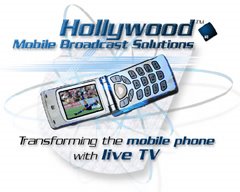 Check out TI's Mobile TV page, and you'll see that live TV programming is making its way to a mobile phone near you. The technology is driven by Hollywood™ Solution's DTV100x chips, single pieces of silicon that combine both TV tuner and demodulator.
A new infrastructure will be needed to push TV programming to cell phones. But where new technology is required, features abound. Subscribers will be able to access not only live (passive) TV, but PPV programming, new interactive TV programming, and even digital radio services -- note to self, sell SIRI and XMSR now. Perhaps suprising are features that require more real estate on the screen or hard drive. I can't imagine picture-in-picture (PIP) on a thumb-sized LCD. That is, without reading glasses twice as thick as my phone. And digital video recording (DVR) has been micro-sized and personalized with the moniker personal video recording, or PVR.
PVR is a form of DVR where Monday Night Football doesn't have to compete with Disney programming for fixed storage space.
I wonder if PVR is more than any sane person would want. When our single, trusty 19" TV went on the blink we were hard pressed to find a new television that was smaller than our refrigerator. You may ask, if one is going to the trouble to record a program, why not wait until one returns to the comfort of their home theater to watch it, sans reading glasses?
I suppose if one has merely a single home theatre, which is dedicated to Disney programming, the PVR might help one catch up on Monday Night Football during a slow moment on Tuesday.
Q: Will you PVR for the road, or watch it at home?
Photo: Texas Instruments. Trademarks are property of their holders.